Subscribe to our blog

Your email:

Ask an Expert

Care to ask us a question and have it answered in our blog? Fill out the form below and we'll get right on it!

Air Pollution Control Innovations

Current Articles | RSS Feed RSS Feed

Marine Scrubber System to Remove SO2 from Diesel Engine Exhaust Gas Using Seawater (SO2 Seawater Scrubber)

  | Share on Twitter Twitter | Submit to Digg digg it |  Add to delicious  delicious |  Submit to StumbleUpon StumbleUpon |  Share on LinkedIn LinkedIn | Submit to Reddit reddit 

On March 18th, 2010 I participated on a panel discussion for the Cruise Lines International Association's Inc. (CLIA) Exhaust Gas Scrubber (EGS) Workshop in Miami, Fl. The workshop was professionally managed by BMT Designers & Planners, a navycruise ship architecture and marine engineering firm.   The panel was comprised of potential marine exhaust gas scrubber vendors.  The intent of the workshop was to provide information to cruise line participants to assess the maturity of the industry and the likelihood that exhaust gas cleaning systems will be a feasible response to the challenges of changes in regulations.

The industry is evaluating alternatives for meeting upcoming SOx emission limits under Annex VI of Marpol 73/78.  The SOx emission limits will require ships to achieve at least a SOx reduction equivalent to 0.1% sulfur fuel by 2015.  This requirement can be met by using more expensive, low sulfur fuel, or by scrubbing the exhaust gas stream.  The rules essentially require > 97% SOx removal assuming 3.5% sulfur fuel.   The International Maritime Organization (IMO) has issued Guidelines for Exhaust Gas Cleaning Systems, Annex 4, Resolution MEPC.170(57), adopted April 4th, 2008 to specify the requirements for testing, survey certification, and verification of exhaust gas cleaning (EGS) systems to ensure compliance with Annex VI.   

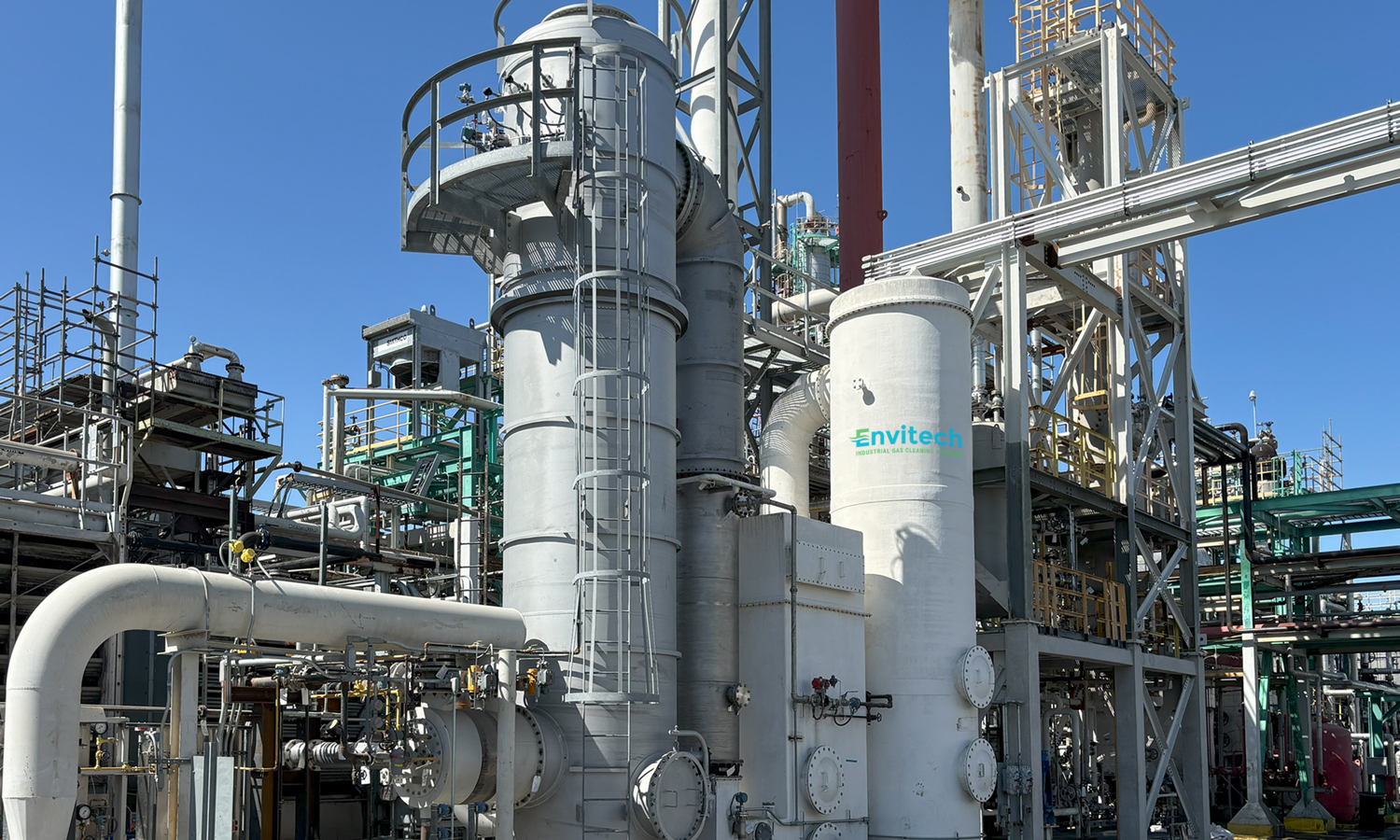
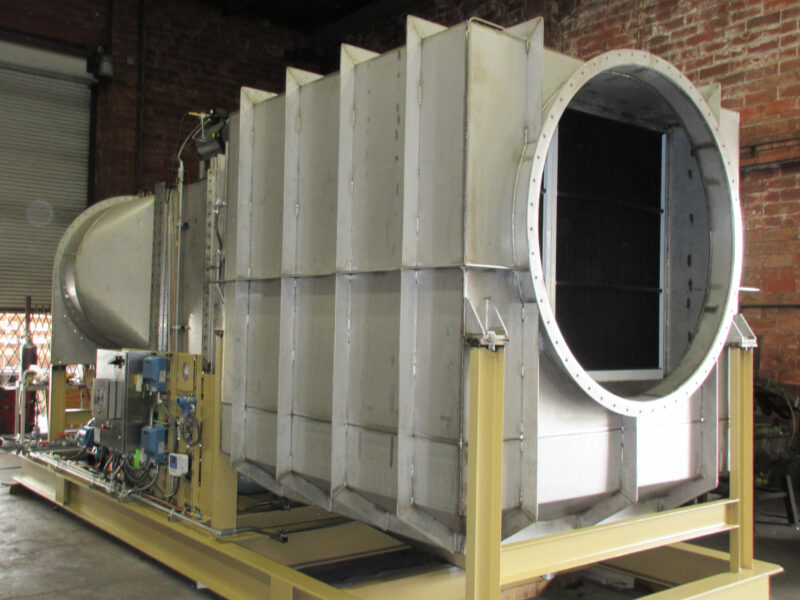
Envitech first started evaluating the marine scrubber application in early 2008 at the request of one of the major cruise lines.  The cruise line was interested in working with a company that could apply industrial air pollution control equipment experience to marine diesel exhaust streams on board a ship.   Envitech has deployed many particulate and acid gas scrubbers on a wide range of combustion processes including a seawater scrubber for an industrial waste incinerator at a pharmaceutical plant.  Many of these systems are similar process requirements for a diesel engine exhaust.   As a result of our evaluation Envitech developed, and recently filed a patent application for, the Hysea Marine Scrubber which is a hybrid seawater scrubber system.  We introduced this technology to the industry during the CLIA EGS workshop.

The Hysea Marine Scrubber uses available seawater alkalinity to scrub SOx.  The system is chemically assisted with caustic solution (NaOH) to achieve high SOx removal and reduced water flow rates.  The chemical consumption is minimal and estimated to be less than 7% of the usage of a closed loop, recirculation system.  The system is designed to provide flexibility to operate in two modes:

  • Open Loop/Caustic Reduced Mode - Continuous, once-though liquid discharge.
  • Closed loop/bunkering Mode - Re-circulated seawater with a small discharge stream that can be temporarily bunkered on board the ship.

The discharge liquid in both operating modes is treated to meet regulatory requirements.  Because chemical assistance with caustic substantially reduces the water flow rate, the water treatment system becomes more manageable on board a ship.  The water treatment system also re-oxygenates the water to meet chemical oxygen demand (COD) standards.

The table below shows a comparison of three different marine scrubber configurations, including:

  • Open Loop - Using once through seawater
  • Closed Loop - Using re-circulated water
  • HySea Marine Scrubber - Using chemically assisted Seawater


ITEM OPEN LOOP CLOSED LOOP HYSEA
Water
   Open Loop Mode
   Closed Loop Mode
Sea Water
Once-Through
-
Fresh Water
Re-circulated
-
Sea Water
Once-through
Re-circulated
Blowdown, gpm
    Open Loop Mode
    Closed Loop Mode

10,000
-

-
5

2,300
5
Energy Consumption, kW
    Open Loop Mode
    Closed Loop Mode

290
-

45
-

90
45
Caustic Consumption
  (est. average), gph
    Open Loop Mode
    Closed Loop Mode


0
-


-
60


4
60

A comparison of the operating parameters highlights the reduced water and power consumption of the hybrid system compared to an open loop system.  It also shows the substantial caustic reduction compared to a closed loop system.  The main advantages of the Hysea Marine scrubber include:

  • Reduced seawater flow rates - 75% - 80% Reduction
    • Reduced power consumption - 70% - 75% Reduction
    • Smaller piping - Simplified installation
    • Smaller water treatment system - Simplified installation
  • High removal efficiency -  0.1% sulfur fuel equivalent
    • Including low alkalinity seawater conditions
  • Operating flexibility to bunker a low flow discharge stream
  • Reliance on reliable and proven process technology
  • Water discharge that exceeds  discharge requirements
  • Water treated for chemical oxygen demand (COD)

Although the Hysea scrubber was designed for ship board use for a diesel engine exhaust, the same design principals also apply to acid gas scrubbing for land based industrial processes that have access to seawater.

A lot of interest in Marine exhaust gas cleaning systems was expressed during the EGS workshop. However, the cruise line industry is still evaluating the full range of options for complying with Annex VI of Marpol 73/78.  The general consensus of the panel participants is that exhaust gas cleaning is not only technically feasible, but provides a compelling financial case as a means for meeting the new regulations.

Photo Credit: Saint Seminole

NOx Scrubbers Using Packed Bed Absorbers

  | Share on Twitter Twitter | Submit to Digg digg it |  Add to delicious  delicious |  Submit to StumbleUpon StumbleUpon |  Share on LinkedIn LinkedIn | Submit to Reddit reddit 

NOx refers to a class of pollutants that is any binary compound of nitrogen and oxygen and is a main contributor to what is commonlyNOx Smog referred to as smog.  It is most commonly produced in combustion processes, but can also be generated in non-combustion processes like metal refining, picking baths, or nitric acid manufacturing to name a few.  The following link: EPA NOX technical bulletin, provides a good overview of NOx as a pollutant, but focuses mostly on NOx formed by combustion processes.

This blog post focuses on non-combustion NOx abatement using packed bed scrubbers.  In general a NOx Scrubber System can be comprised of a single packed bed absorber to several other system components, including:

  • Quencher
  • Stage 1 Packed Bed: Conversion of NO to NO2
  • Stage 2 Packed Bed: Absorption and Reduction of NO2
  • Stage 3 Packed Bed: H2S Odor Control.

The actual configuration will depend on a combination of factors including:

The temperature of the inlet gas

  • The ratio of NO/NO2
  • The Outlet NO limit
  • Preferences of the plant regarding the risk of H2S odors.

Each component is further described below.

Quencher - The quench stage is used to cool the gas to the saturation in the case the inlet gas is hot. This is done with an evaporative quencher constructed of metal.

Stage 1 Packed Bed: Conversion of NO to NO2 - This stage is used in the case there is a sufficiently high concentration of NO in the inlet gas stream or sufficiently low outlet concentration limit for NO.  NO is essentially insoluble in water, but it can be quickly oxidized to NO2 by chlorine dioxide (ClO2) or ozone (O3).  This can be done using a packed bed, but the reaction of NO actually occurs in the gas phase. The packed bed functions as a ClO2 generator and static mixer, or as a static mixer for ozone injected in the form of an aqueous solution. ClO2 can be generated by the reaction of sodium chlorite (NaClO2) with a strong acid. Sulfuric acid (H2SO4) is commonly used, but if the air being scrubbed contains enough nitric acid fumes, it may not be necessary to add much H2SO4.  Most NOx scrubbers don't have an oxidation stage. When NOx is generated by the reaction of nitric acid with metals, it usually consists mainly of NO2. NO is invisible, and it is much less toxic than NO2. (The Threshold Limit Value for 8-hour workplace exposure to NO is typically 25 ppmv, vs. 3 ppmv for NO2.)

Stage 2 Packed Bed: Absorption and Reduction of NO2 - NO2 reacts only slowly with caustic solutions, and when it does, a competing reaction with water converts part of the NO2 back to NO. So scrubbing NO2 using NaOH alone is very inefficient.  For efficient removal of NO2, a strong reducing agent that reacts faster (usually sodium hydrosulfide: NaHS) is added as required to maintain an ORP of about -400 mV in the scrubbing solution. NaOH is added as required to maintain pH ≥ 12.5, in order to minimize H2S emissions.

Stage 3 Packed Bed: H2S Odor Control - This stage is optional. If the pH and ORP settings in Stage 2 are adjusted properly, there will be little H2S released from that stage. However, the strongly alkaline hydrosulfide solution in Stage 2 is a severe environment for pH and ORP probes, so the probes will tend to get out of calibration faster than they would in a scrubber operating at lower pH levels. Some customers with NOx scrubbers prefer to install a caustic scrubbing stage as a second line of defense against odor emissions.  This may be more important to plants located near other businesses or a residential community.  The wastewater from Stage 3, containing excess NaHS and excess NaOH, can be recycled to the sump of Stage 2 in order to reduce chemical usage there.

Please click the icons below to view a video of a packed bed scrubber and quencher video, respectively.

packed bed scrubber

quencher

Photo Credit: monovinyl

Pharmaceutical Scrubber

  | Share on Twitter Twitter | Submit to Digg digg it |  Add to delicious  delicious |  Submit to StumbleUpon StumbleUpon |  Share on LinkedIn LinkedIn | Submit to Reddit reddit 

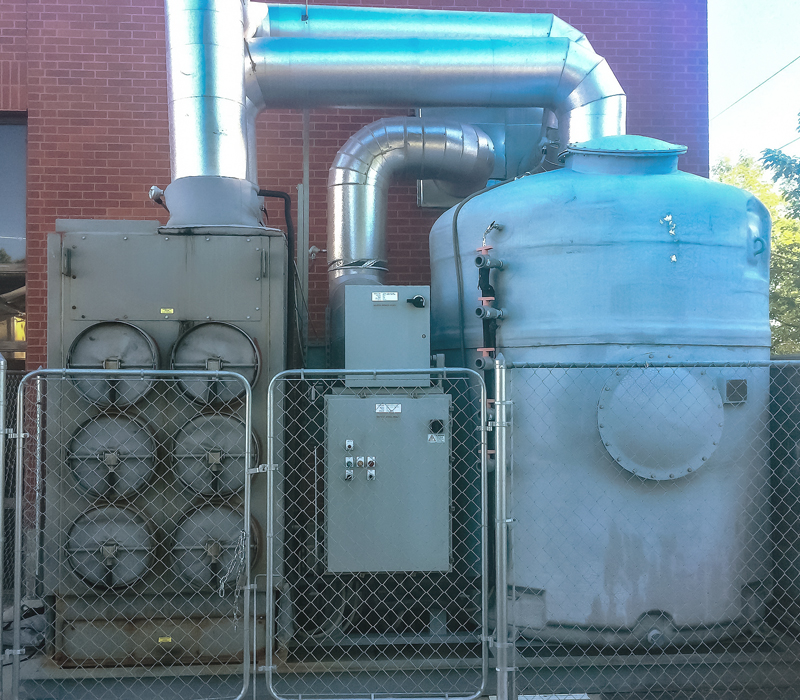
pharmaceutical scrubberAs the EPA continues to tighten the emissions belt, I am seeing new industries with air emissions issues. One such industry is pharmaceuticals, who are now more commonly regulated for acid gases on post-combustion devices.

Pharmaceutical air emissions are typically a result of an organic fume from a solvent. The fume, containing vaporized solvent, is captured either within a fume hood or central ventilation system. When regulated, the most effective way of removing a fume is to combust it in a regenerative thermal oxidizer (RTO) or some other combustion device.

The combustion of a solvent such as methyl chloride in an RTO leaves three compounds: carbon dioxide, water vapor, and hydrochloric acid. The last of the three - hydrochloric acid - is often treated as an emission and if so must be removed from the outlet exhaust.

Pharmaceutical Scrubber 

The most best method for removing hydrochloric acid from a gas is the use of a pharmaceutical scrubber. A scrubber offers extremely high efficiencies (greater than 99%, or as required) at a low pressure drop. Recirculating neutralized water across a packed tower, the capital and operating cost of a scrubber is minimal. Further, the effluent from a HCl scrubber contains only sodium chloride - table salt - and can easily be disposed of through a wastewater sewer with little to no further treatment. Using FRP for the scrubber provides a low cost building material highly resistant to acid attack.

Hydrochloric Acid Corrosion

The removal of hydrochloric acid from a combustion exhaust does offer one particular difficulty over other common acid gases, of which designers and operators in the pharmaceutical industry need to be wary. Hydrochloric acid and neutralized chlorides are very aggressive towards most metals, especially so at elevated temperatures typically seen on the outlet of a combustion process. Since the HCl is contained in the exhaust of a combustion process, the inlet gas temperature to the scrubber is high. In turn, the recirculation water temperature is also high, usually well above 100F. Standard metallic materials such as stainless steel will quickly corrode in this environment.

In the past, I have used both AL6XN and hastelloy for metallic materials in HCl scrubber systems. Common metallic items in a pharmaceutical scrubber include the quencher, instrumentation, and downstream devices.  AL6XN is a duplex material that provides very good corrosion resistance to around 1000F. It also has about an order of magnitude greater chloride pitting resistance than stainless steel at neutral pH, and over two magnitudes resistance at low pH.  AL6XN is ideal for quenchers on the exhaust of an RTO, where the outlet temperature is usually around 500F. Hastelloy is more expensive, but it offers heat resistance to 2500F as well as a further order of magnitude resistance to chlorides over AL6XN.

Hydrochloric Acid Mist

The other issue provided by hydrochloric acid in a gas stream is the formation of hydrochloric acid mist, which I have previously touched upon in my acid gas dewpoint post.

Hydrochloric acid mist usually requires a high efficiency mesh pad for removal of any HCl aerosols that may form in the scrubber.  A mesh pad is more expensive than a standard wave form mist eliminator, and is also much more prone to particulate plugging.  If hydrochloric acid is in your gas stream, make sure you consider a mesh pad and beware of particulate!

Acid Gas Dewpoint

  | Share on Twitter Twitter | Submit to Digg digg it |  Add to delicious  delicious |  Submit to StumbleUpon StumbleUpon |  Share on LinkedIn LinkedIn | Submit to Reddit reddit 

acid gas dewpointAcid gases can be found in the exhaust of a large number of combustion processes.  As a gas, the acid compounds usually are not particularly corrosive and are relatively easy to remove.  However, when the temperature of the gas drops below the acid gas dewpoint, an acid mist can form.  The acid mist can turn into a fine aerosol or it can condense on a cold surface.  Acid mist poses a number of design problems, due to the small size of the mist particles and the corrosivity of the liquid form of the acid.

Aerosol Formation

Aerosol formation occurs when the bulk temperature of the gas drops below the acid dewpoint of the gas.  Much like the formation of fog, the acid gas condenses into tiny liquid droplets.  The size of these droplets can vary widely depending on the acid, the amount of condensation nuclei present in the gas, and degree of supersaturation.

The most common problem that occurs with acid aerosol formation is the inability to capture the aerosol.  Many acid gas exhaust treatment systems utilize a packed bed scrubber to remove the acid.  Packed bed scrubbers are extremely efficient at removing acid in the gas, but unfortunately are ineffective at removing acid aerosol.

The solution to removing acidic aerosol mist is to use a high efficiency entrainment separator or Venturi scrubber, which can effectively capture particles to 1-micron or 0.5-micron, respectively.  If the acidic aerosol mist is primarily sub-micron in nature, a wet electrostatic precipitator also provides a useful solution.

Wall Condensation

Wall condensation occurs when a cold surface is in contact with a hot gas.  If the wall is cooler than the acid dewpoint, acid can condense onto the surface of the wall.  There are several dangers with wall condensation.

First, the material selection for an acid is dependent on its form.  Many acids are not corrosive as a gas, but are very corrosive as acids.  Engineers selecting materials under the assumption that the acid remains a gas often choose materials that are not compatible with the acid in its liquid form.

Second, when condensed, the acid is much more concentrated than it is in the bulk medium.  Instead of selecting a material for a gas containing 10 ppm of SO3 gas, the engineer now has to worry about a nearly pure sulfuric acid droplet.

Finally, the acid can condense in non-ideal locations, leading to pooling and further corrosion concerns.

The solution to preventing the effects of wall condensation is to insulate walls to prevent cold surfaces and select materials for the concentrated, liquid form of the acid in locations where wall condensation is unavoidable.

Acid Dew Point

All gases have a dew point that is dependent on the temperature, pressure, and concentration of the acid in the gas.  This article provides acid gas dewpoint equations for a number of acids.  Below are the formulae for a few of the more common acids in exhaust gases.

Tdp = Dewpoint Temperature, K

Pw = Partial Pressure of water, mmHg

Pa = Partial Pressure of acid, mmHg

Hydrochloric acid (HCl)

1000/Tdp = 3.7368 - 0.1591 * ln (Pw) - 0.0326 ln (Pa) + 0.00269 * ln (Pa) * ln (Pw)

Sulfur Dioxide (SO2)

1000/Tdp = 3.9526 - 0.1863 * ln (Pw) + 0.000867 ln (Pa) - 0.000913 * ln (Pa) * ln (Pw)

Sulfuric Acid (H2SO4)

1000/Tdp = 2.276 - 0.0294 * ln (Pw) - 0.0858 ln (Pa) + 0.0062 * ln (Pa) * ln (Pw)

Photo Credit: tinyfroglet

Acid Gas Scrubbers and Calcium: Solutions

  | Share on Twitter Twitter | Submit to Digg digg it |  Add to delicious  delicious |  Submit to StumbleUpon StumbleUpon |  Share on LinkedIn LinkedIn | Submit to Reddit reddit 

acid gas scrubberCalcium scale occurs everywhere.  The photo on the right shows calcium carbonate scale lining the rock formations in Lake Mead, just above Hoover Dam.  The calcium from this photo deposited as a result of dissolution of calcium in upstream limestone rock formations along the Colorado River, followed by evaporation and reprecipitation in Lake Mead.  In a roundabout way, this is the same method that calcium scale forms in a scrubber.  Calcium enters via the feedwater (Colorado River), concentrates due to evaporation (the hot Nevada sun), and forms a precipitate as the calcium concentration exceeds the solubility limit (lime deposits).


In my previous post, I detailed how to determine if calcium is a problem in your acid gas scrubber.  Here, I will detail several methods for avoiding calcium scale and, when it arises, cleaning calcium scale.

Avoiding Scaling

The best way to tackle scaling is to avoid scaling. There are three basic methods to avoiding scale:

1.  Remove the calcium

The easiest way to avoid calcium is to remove the calcium!  First, try to select a feedwater that does not contain calcium.  Condensates are often an excellent source of calcium-free feed water.  If calcium-free water sources are not available, investigate the cost associated with a softener.  Companies like Culligan offer a wide range of softeners.  Water softening is a competitive market; there are often local suppliers that can offer low cost solutions.

2. Adjust the chemistry

There are several tricks that can be employed to permit higher concentrations of calcium in your scrubber water without leading to scale formation.  For situations where calcium carbonate is the primary scale, you can decrease the pH of the scrubber.  Acid gas removal efficiency decreases when operating at a lower pH, but the drop in efficiency can be overcome by increasing the packing height (and thus the number of transfer units).  Decreasing the pH decreases the LSI index of the water; LSI indices less than 0 are non-scaling.

Companies like Nalco also sell anti-scalants that reduce the activity of the calcium ion in solution, thus eliminating the potential for calcium scale.  Anti-scalants are usually much more expensive than acid treatment, but also permit operation at a higher pH which is more conducive to acid gas scrubbing.

3.  Increase the blow down

In my previous post, I documented how the calcium concentration was tied to the blow down flow rate.  One of the easiest and most practical solutions therefore is to increase the blow down flow rate.  Increasing the blow down flow rate reduces the concentration of both the calcium and associate scaling anion (CO3, SO4, F) in the scrubber recirculation water.  While increasing the blow down flow rate will add cost by increasing the feed water flow rate (to make up water removed in the blow down) as well as increasing sewer and other wastewater charges, it is often preferable as a quick fix solution for reducing scaling.

Coping with Scaling

In many ways, scaling is inevitable.  A process upset, an exhausted bed, or a blocked blow down valve - these things happen.  How do you remove the scale?

Calcium carbonate is the most common scale.  It is also amongst the easiest to clean.  Lowering the pH is the most aggressive way to dissolve the scale, though running at any LSI << 0 will tend to dissolve the calcium carbonate.

Calcium sulfate is another common scale, especially in an SO2 scrubber.  The best method for removing calcium sulfate is using hot, low pH water to remove the scale.  Calcium sulfate, like calcium carbonate, will dissolve.  Chelants such as EDTA are also helpful for this form of scale.

Calcium fluoride is the worst scale to remove, since it has such a low solubility.  Physical methods work best for calcium fluoride, as dissolving calcium fluoride is difficult.  Some chelants such as EDTA are available on the market for removing calcium fluoride, but are not likely to be as effective as with other forms of scale.

Note: Photo of Lake Mead by Tim Pearce

Acid Gas Scrubbers and Calcium: The Problem

  | Share on Twitter Twitter | Submit to Digg digg it |  Add to delicious  delicious |  Submit to StumbleUpon StumbleUpon |  Share on LinkedIn LinkedIn | Submit to Reddit reddit 

Acid ScrubberAcid gas scrubbers are commonly used for the removal of acid gases, such as sulfur dioxide, hydrochloric acid, chlorine, hydrofluoric acid, and nitrogen dioxide.  These scrubbers typically use a basic reagent; often sodium hydroxide, soda ash, or lime to keep the scrubber liquor at neutral to high pH.

Operation at a high pH can lead to unexpected problems with water chemistry.  Calcium carbonate, calcium sulfate, and calcium fluoride all can cause scale within the scrubber.  Scale can reduce the effective pipe diameters, coat packing, block nozzles, foul instrumentation.  In the worst extremes, calcium scale can shut down the scrubber and in turn shut down the upstream process equipment.

How does one avoid such hazards?  In the first of this two part series, I will go through the five steps for determining if calcium scale is a threat to your acid scrubber.

Step 1: Determine the calcium concentration

Calcium primarily infiltrates an acid scrubber through two sources: water makeup and chemical addition.  Water makeup is typically from a municipal or well source.  The calcium concentration can usually be found in municipal water reports.  Well water can be tested cheaply at an outside laboratory for calcium.

Calcium content for sodium hydroxide and soda ash is a bit more difficult to determine, but can be specified in the procurement of the chemicals.  Using the chemical consumption rate and the blow down flow rate, the amount of calcium left in the scrubber water can be calculated.  Lime actually contains calcium, and should be avoided where calcium scale is possible.

Step 2: Determine the scaling anion concentrations

The three most common calcium scaling anions are carbonate, sulfate, and fluoride. Carbonate primarily enters the system through fresh water, though in acid gases with high carbon dioxide content carbonate can also absorb into the water.  Sulfates enter through fresh water, but due to the high solubility of calcium sulfate, rarely cause problems due to makeup water sulfate.  Instead, sulfates are a byproduct of the neutralization of SO2.  SO2 neutralizes to HSO3 and SO3 in water, and can convert to SO4 depending on the residence time, pH, temperature, and oxygen content of the acid gas.

Step 3: Calculate the buildup of calcium and the scaling anions.

Determining the concentration of ions in the scrubber requires two steps.

1.  Sum all of the mass flow rates (mg/min) of the ion into the scrubber water, including makeup water, chemical, and absorption from the gas.

2.  Divide the mass flow rates by the blow down flow rate (L/min) to give a concentration (mg/L).

Step 4: Calculate the LSI index

The most common form of calcium scale is calcium carbonate.  Calcium carbonate is formed by the interaction of calcium with carbonate alkalinity.  Carbonate alkalinity is often present in fresh water; carbon dioxide can also dissolve in water to create carbonates.

The LSI index offers the best method for determining calcium carbonate scaling; Edstrom provides a wonderful explanation at their website.

Step 5: Calculate the sulfate and fluoride solubilities

The final step is to determine the sulfate and fluoride solubilities. 

Calcium sulfate is relatively soluble, but calcium sulfate scale can still occur in SO2 scrubbers. Scale forms for calcium sulfate if the solubility product exceeds 4.93x10^-5.  The solubility product for calcium sulfate is equal to the concentration of calcium (mol/L) times the concentration of sulfate (mol/L).  The calcium concentration can be converted from mg/L to mol/L by dividing by 40,000.  The sulfate concentration can be converted from mg/L to mol/L by dividing by 96,000.

Calcium fluoride is the opposite of calcium sulfate; it is extremely insoluble.  Scale forms for calcium fluoride if the solubility product exceeds 3.45x10^-11.  The solubility product for calcium fluoride is equal to the concentration of calcium (mol/L) times the square of the concentration of fluoride (mol/L).  The calcium concentration can be converted from mg/L to mol/L by dividing by 40,000.  The fluoride concentration can be converted from mg/L to mol/L by dividing by 96,000.

In my next blog post, I will discuss ways to avoid scaling, and remedies if you do encounter scale.

All Posts