Subscribe to our blog

Your email:

Ask an Expert

Care to ask us a question and have it answered in our blog? Fill out the form below and we'll get right on it!

Air Pollution Control Innovations

Current Articles | RSS Feed RSS Feed

Wet Scrubbers for meeting the new HMIWI MACT Standard

  | Share on Twitter Twitter | Submit to Digg digg it |  Add to delicious  delicious |  Submit to StumbleUpon StumbleUpon |  Share on LinkedIn LinkedIn | Submit to Reddit reddit 

Biohaz logoI gave recent presentations at the International Thermal Treatment (IT3) Conference in San Francisco and the Annual AWMA conference in Calgary, Canada that discusses the new hospital/medical/infectious waste incineration (HMIWI) MACT standard and implications for existing systems.  Below is the abstract.  A free download is available by clicking on the link below.  The paper presents emissions data on several scrubber systems and discusses how these relate to the new rules.  I also discuss cost effective strategies to comply with the new rules using add-on controls. 

ABSTRACT

On October 6th, 2009, proposed revisions to the New Source Performance Standards (NSPS) and Emission guidelines (EGs) for the Hospital/Medical/Infectious Waste Incinerators (HMIWI) Standards became final. These regulations, originally promulgated in 1997, were established under Section 129 of the Clean Air Act (CAA) and serve as the maximum achievable control technology (MACT) standards for hospital, medical, and infectious waste incinerators.

Wet scrubbers are currently used on many hospital, medical, and infectious waste incinerators in the United States.  The new emission limits exceed the design capability of most of these systems, primarily with respect to particulate matter (PM), lead (Pd), cadmium (Cd), and mercury (Hg). As a consequence, new control strategies are needed to meet the more stringent standards. 

This paper presents a cost effective control strategy for meeting the new limits and discusses how the strategy has been implemented on similar hazardous waste incinerator scrubbers.

Please click on the below icon to download a white paper on this topic: "Wet Scrubber Control Strategy to Meet the New Hospital/Medical/Infectious Waste Incinerator Standard"  

 Download


Photo Credit: bravosixninerdelta


Venturi Scrubbers for EPA HMIWI MACT Standard

  | Share on Twitter Twitter | Submit to Digg digg it |  Add to delicious  delicious |  Submit to StumbleUpon StumbleUpon |  Share on LinkedIn LinkedIn | Submit to Reddit reddit 

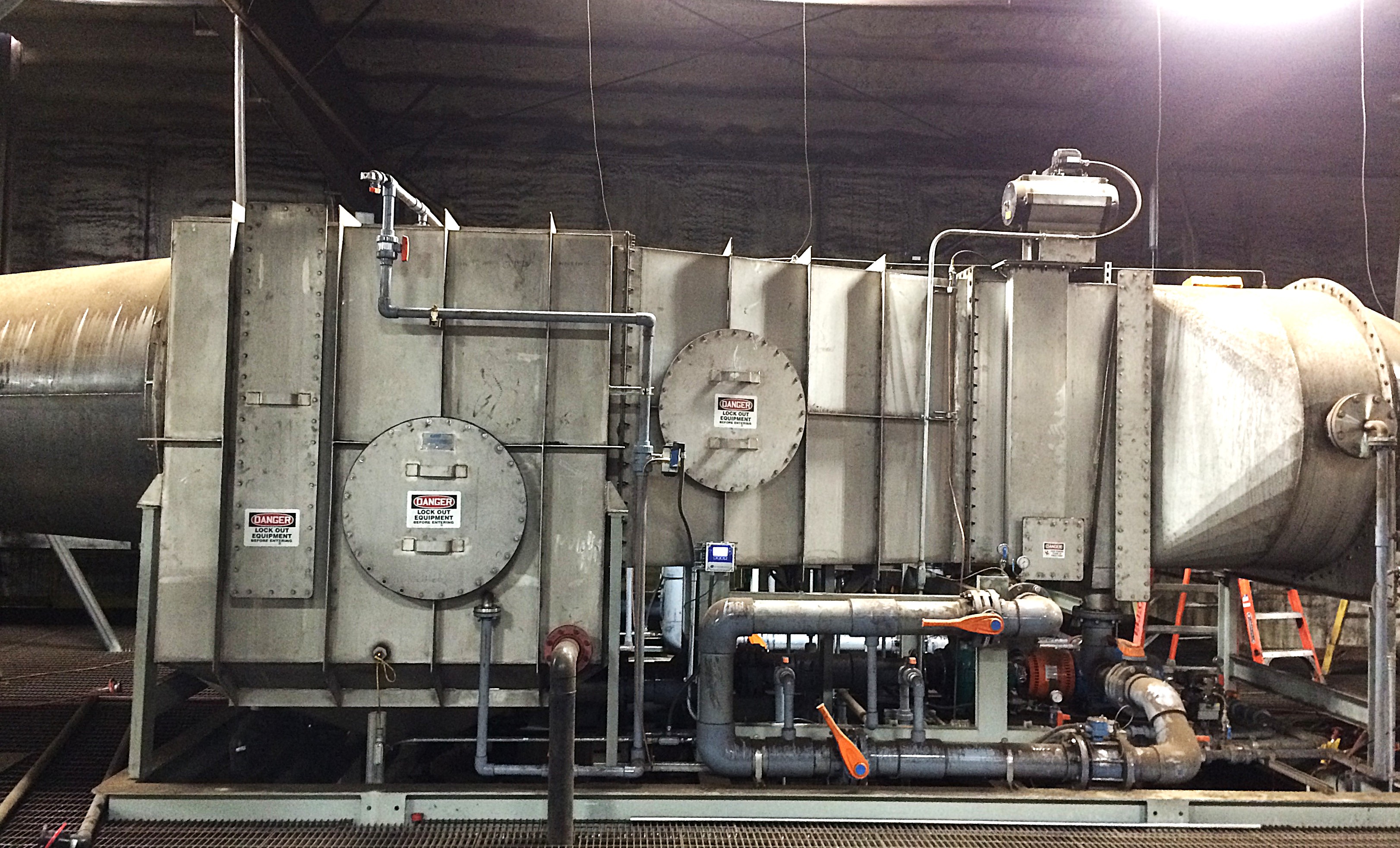
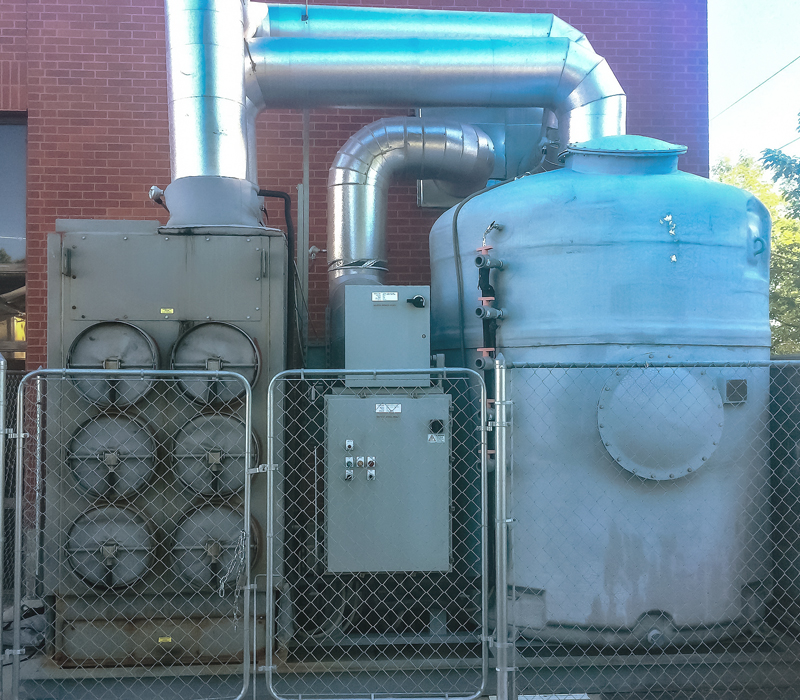
On September 15th, 2009, proposed revisions to the New Source Performance Standards (NSPS) and Emission guidelines (EGs) for the HMIWI standards became final. These regulations, originally promulgated in 1997, were established under Section 129 of the Clean air Act (CAA), and serve as the maximum achievable control technology (MACT) standards for hospital, medical, and infectious waste incinerators.Venturi Scrubber

The proposed revisions included both a five year review and a response to a court-ordered Remand.  Many industries have been following these new revisions closely, including the American Forest & Paper Association (AF&PA), the Portland Cement Association (PCA), the Council of Industrial Boiler Owners (CIBO), the National Brick Research Center (NBRC), and the National Lime Association (NLA), among others.  The methodology used by the EPA to formulate these revisions may eventually be applied to the industries of these groups. 

There are a number of objections to the new rules which are viewed by some in industry as unachievable.  One of these objections relates to the establishment of floors for the best-performing units for each of the regulated pollutants individually. This has been considered by some as a MACT-on-MACT approach which may result in the need for a combination of control technologies. 

Below is a summary comparison of the previous emission limits (1997) and the new emission limits (2009) in response to the Remand for new and existing HMIWI units for large, medium and small incinerators.  Many hazardous and medical waste incinerator scrubbers meet the previous emission limits (1997) with a Venturi scrubber system.  However, the new standards for both existing and new HMIWI units are significantly more stringent with respect to particulate, Pd, and Cd.  The new standards, would be met with the same basic technology, however, add-on controls would be needed as a polishing step in most circumstances.  In a future blog post, I'll discuss add-on control strategies that can be used to meet these new requirements.

LARGE INCINERATORS, > 500 LB/HR


    1997 2009 1997 2009
Pollutant Units Existing Existing New New
Particulates, EPA Method 5 gr/dscf 0.015 0.011 0.015 0.0080
HCl, EPA Method 26 ppmv, or 100 6.6 15 5.1
  % reduction 93% - 99% -
SO2 ppmv 55 9 55 1.6
Pb EPA Method 29 mg/dscm, or 1.2 0.036 0.07 0.00069
  % reduction 70% - 98% -
Cd, EPA Method 29 mg/dscm, or 0.16 0.0092 0.04 0.00013
  % reduction 65% - 90% -
Dioxins/furans, EPA Method 23 Total (ng/dscm) 125 9.3 25 9.3
  TEQ (ng/dscm) 2.3 0.054 0.6 0.035

MEDIUM INCINERATORS > 200 TO < 500 LB/HR

    1997 2009 1997 2009
Pollutant Units Existing Existing New New
Particulates, EPA Method 5 gr/dscf 0.03 0.020 0.015 0.0095
HCl, EPA Method 26 ppmv, or 100 7.7 15 7.7
  % reduction 93% - 99% -
SO2 ppmv 55 4.2 55 1.4
Pb EPA Method 29 mg/dscm, or 1.2 0.018 0.07 0.018
  % reduction 70% - 98% -
Cd, EPA Method 29 mg/dscm, or 0.16 0.013 0.04 0.0098
  % reduction 65% - 90% -
Dioxins/furans, EPA Method 23 Total (ng/dscm) 125 0.85 25 0.47
  TEQ (ng/dscm) 2.3 0.020 0.6 0.014

SMALL INCINERATORS, < 200 LB/HR

    1997 2009 1997 2009
Pollutant Units Existing Existing New New
Particulates, EPA Method 5 gr/dscf 0.05 0.029 0.03 0.029
HCl, EPA Method 26 ppmv, or 100 44 15 15
  % reduction 93% - 99% -
SO2 ppmv 55 4.2 55 1.4
Pb EPA Method 29 mg/dscm, or 1.2 0.31 1.2 0.31
  % reduction 70% - 70% -
Cd, EPA Method 29 mg/dscm, or 0.16 0.017 0.16 0.017
  % reduction 65% - 65% -
Dioxins/furans, EPA Method 23 Total (ng/dscm) 125 16 125 16
  TEQ (ng/dscm) 2.3 0.013 2.3 0.0130


All emission limits are measured at 7% oxygen.


All Posts