Posted by Andy Olds on Thu, Apr 08, 2010 @ 02:32 PM
On March 18th, 2010 I participated on a panel discussion for the Cruise Lines International Association's Inc. (CLIA) Exhaust Gas Scrubber (EGS) Workshop in Miami, Fl. The workshop was professionally managed by BMT Designers & Planners, a navy
architecture and marine engineering firm. The panel was comprised of potential marine exhaust gas scrubber vendors. The intent of the workshop was to provide information to cruise line participants to assess the maturity of the industry and the likelihood that exhaust gas cleaning systems will be a feasible response to the challenges of changes in regulations.
The industry is evaluating alternatives for meeting upcoming SOx emission limits under Annex VI of Marpol 73/78. The SOx emission limits will require ships to achieve at least a SOx reduction equivalent to 0.1% sulfur fuel by 2015. This requirement can be met by using more expensive, low sulfur fuel, or by scrubbing the exhaust gas stream. The rules essentially require > 97% SOx removal assuming 3.5% sulfur fuel. The International Maritime Organization (IMO) has issued Guidelines for Exhaust Gas Cleaning Systems, Annex 4, Resolution MEPC.170(57), adopted April 4th, 2008 to specify the requirements for testing, survey certification, and verification of exhaust gas cleaning (EGS) systems to ensure compliance with Annex VI.
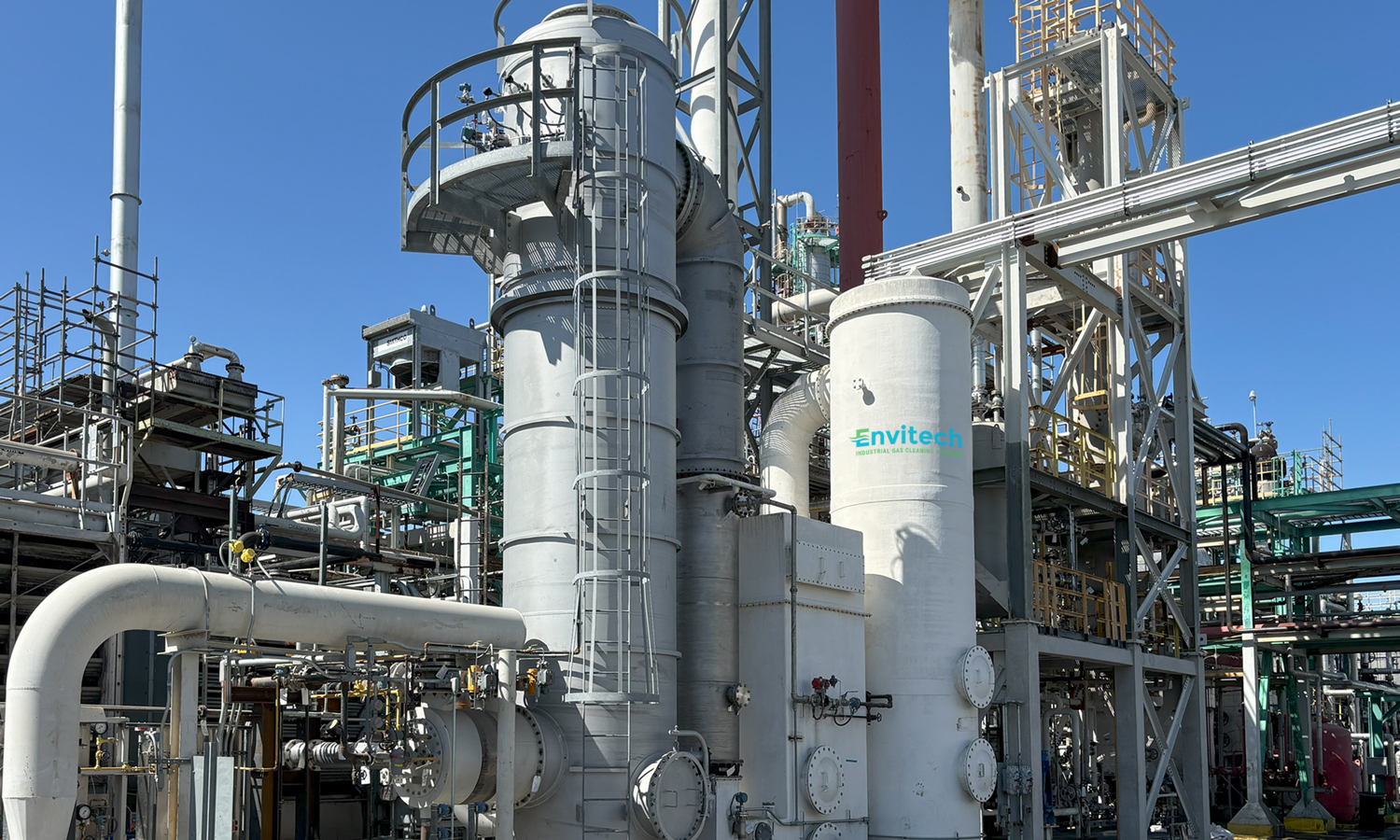
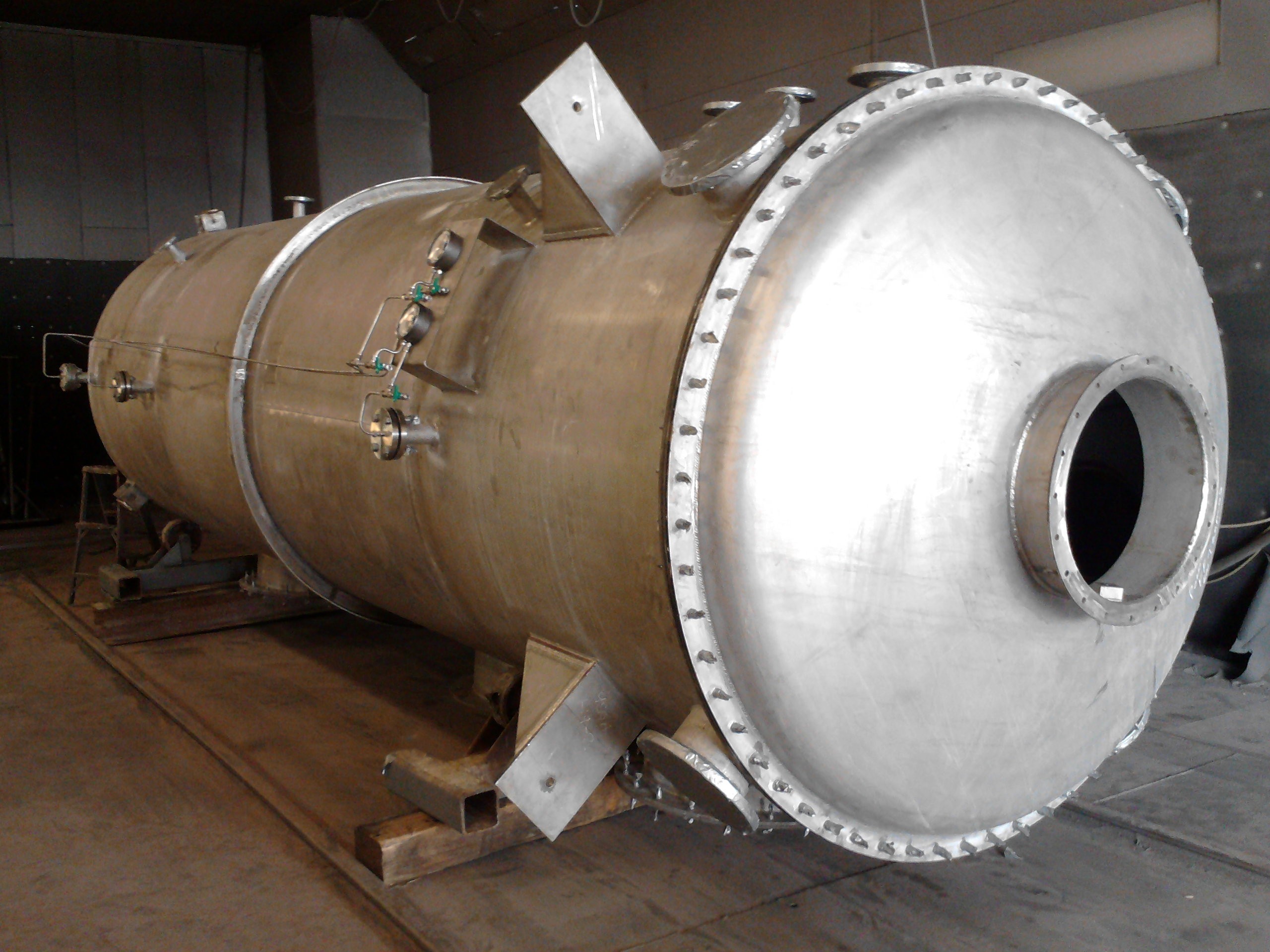
Envitech first started evaluating the marine scrubber application in early 2008 at the request of one of the major cruise lines. The cruise line was interested in working with a company that could apply industrial air pollution control equipment experience to marine diesel exhaust streams on board a ship. Envitech has deployed many particulate and acid gas scrubbers on a wide range of combustion processes including a seawater scrubber for an industrial waste incinerator at a pharmaceutical plant. Many of these systems are similar process requirements for a diesel engine exhaust. As a result of our evaluation Envitech developed, and recently filed a patent application for, the Hysea Marine Scrubber which is a hybrid seawater scrubber system. We introduced this technology to the industry during the CLIA EGS workshop.
The Hysea Marine Scrubber uses available seawater alkalinity to scrub SOx. The system is chemically assisted with caustic solution (NaOH) to achieve high SOx removal and reduced water flow rates. The chemical consumption is minimal and estimated to be less than 7% of the usage of a closed loop, recirculation system. The system is designed to provide flexibility to operate in two modes:
-
Open Loop/Caustic Reduced Mode - Continuous, once-though liquid discharge.
-
Closed loop/bunkering Mode - Re-circulated seawater with a small discharge stream that can be temporarily bunkered on board the ship.
The discharge liquid in both operating modes is treated to meet regulatory requirements. Because chemical assistance with caustic substantially reduces the water flow rate, the water treatment system becomes more manageable on board a ship. The water treatment system also re-oxygenates the water to meet chemical oxygen demand (COD) standards.
The table below shows a comparison of three different marine scrubber configurations, including:
-
Open Loop - Using once through seawater
-
Closed Loop - Using re-circulated water
-
HySea Marine Scrubber - Using chemically assisted Seawater
| ITEM |
OPEN LOOP |
CLOSED LOOP |
HYSEA |
Water Open Loop Mode Closed Loop Mode
|
Sea Water Once-Through - |
Fresh Water Re-circulated - |
Sea Water Once-through Re-circulated |
Blowdown, gpm Open Loop Mode Closed Loop Mode
|
10,000 - |
- 5 |
2,300 5 |
Energy Consumption, kW Open Loop Mode Closed Loop Mode
|
290 - |
45 - |
90 45 |
Caustic Consumption (est. average), gph Open Loop Mode Closed Loop Mode
|
0 - |
- 60 |
4 60 |
A comparison of the operating parameters highlights the reduced water and power consumption of the hybrid system compared to an open loop system. It also shows the substantial caustic reduction compared to a closed loop system. The main advantages of the Hysea Marine scrubber include:
Although the Hysea scrubber was designed for ship board use for a diesel engine exhaust, the same design principals also apply to acid gas scrubbing for land based industrial processes that have access to seawater.
A lot of interest in Marine exhaust gas cleaning systems was expressed during the EGS workshop. However, the cruise line industry is still evaluating the full range of options for complying with Annex VI of Marpol 73/78. The general consensus of the panel participants is that exhaust gas cleaning is not only technically feasible, but provides a compelling financial case as a means for meeting the new regulations.
Photo Credit: Saint Seminole
Posted by Andy Bartocci on Mon, Feb 01, 2010 @ 11:59 AM
Venturi scrubbers are commonly used in pollution control systems as particulate control devices. Particles are collected primarily according to their aerodynamic size through inertial mechanisms. Good particle collection is achieved by maintaining a high differential velocity between particles in the gas stream and water droplets in the Venturi throat. A high differential velocity is created by reducing the cross sectional area in the Venturi throat and thereby creating a pressure drop. The reduction in area accelerates the particles relative to water that is injected into the throat perpendicular to the gas flow. As particles collide with the water droplets they become entrained. The particle laden droplets are then collected in the Venturi sump and are purged in a blowdown stream.
A key to Venturi performance is therefore maintaining a constant pressure drop across the throat. This is relatively straightforward if you have a process with a constant flow rate. However, many processes have variable flow rates. An incinerator or kiln comes to mind where there are changing flow rates throughout the process cycle. In many cases the variation may be as high as 4:1 or 6:1 from the maximum to minimum flow rate. This ratio is often called the turn-down ratio. Three methods of maintaining a constant pressure drop for variable flow conditions are discussed below:
- Reflux Damper
- Variable Throat
- Manual Inserts
Reflux Damper - A reflux damper is often used on Venturi scrubber systems for solid waste combustors. A solid waste combustor can be an incinerator, kiln, gasifier, or plasma reactor. The Venturi is designed for the maximum flow condition. When the gas flow decreases, ambient air is recycled to the Venturi inlet through a pneumatically actuated damper to make up the difference. The ambient air is recycled from the downstream side (clean side) of an induced draft fan which is used to pull the gas through the system. The damper modulates to maintain the combustor draft pressure based on a 4-20 mA control signal from a draft sensor mounted in the combustor chamber.
The flow rate is equal to the design gas velocity times the cross sectional area. As the flow rate decreases the cross sectional area must be reduced to maintain the design gas velocity. For this reason a reflux damper is particularly recommended for smaller gas flows because it is easier to modulate than for a variable throat. This is because the gas velocity of a reflux damper is about 1/6th the gas velocity of a Venturi throat. A reflux damper is therefore less sensitive to flow rate variation. This makes it easier to tune and maintain the control loop. Another advantage of a reflux damper is the recycled gas is clean because it has already passed through the Venturi. Therefore there is no potential for fouling the damper blade from particulate in the gas.
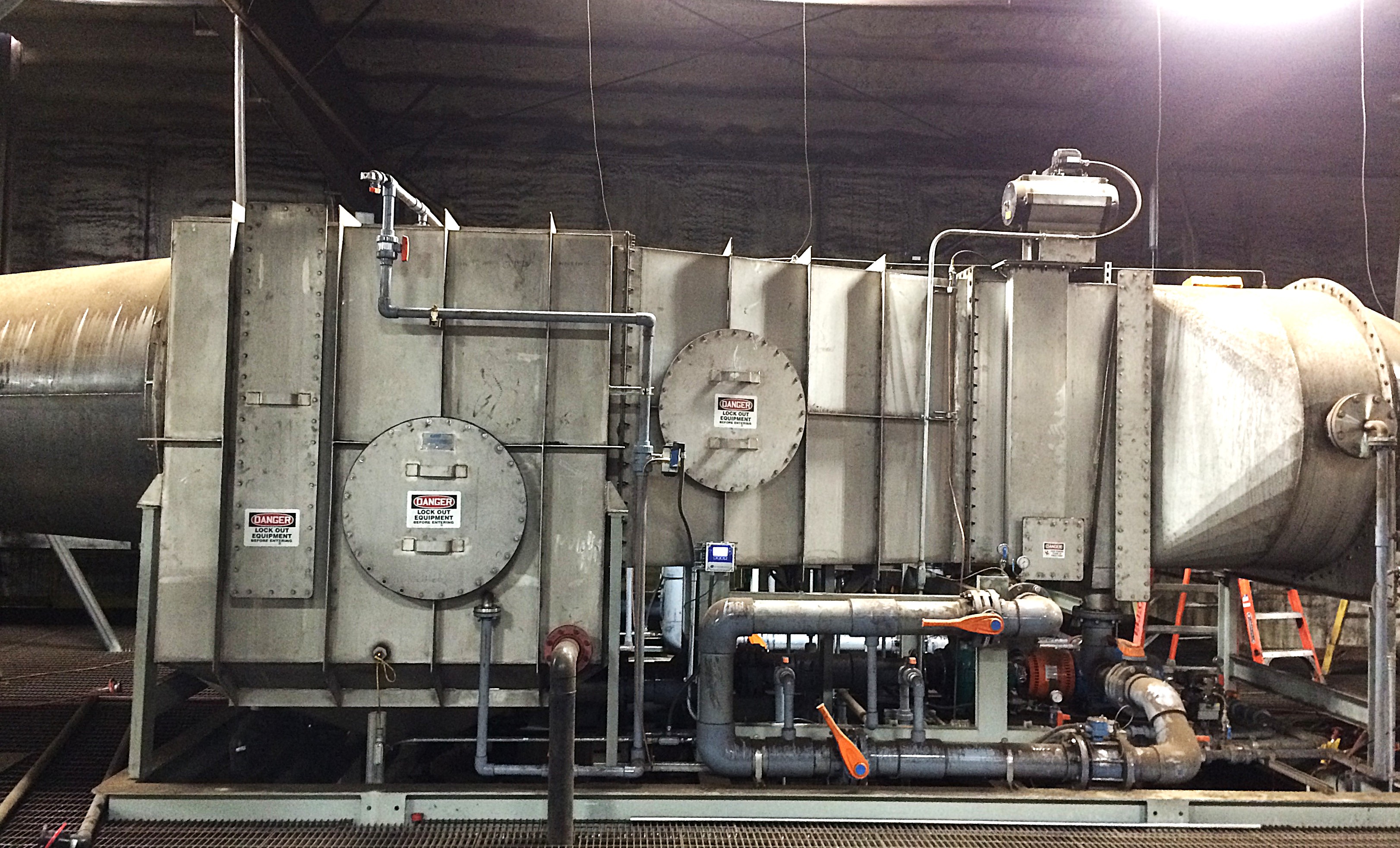
The adjacent photo shows a 400 lb/hr medical waste incinerator scrubber with a Venturi inlet flow rate of 1,200 scfm. The reflux damper can be seen as the white horizontal duct from the ID fan outlet to the Venturi inlet on the right hand side of the rectangular condenser/absorber box.
Variable Throat - A variable throat Venturi is another common method of maintaining a constant pressure drop across a Venturi scrubber system. A valve is integrated into the Venturi throat. At maximum flow, the valve is fully open. As the flow decreases, the valve closes to reduce the cross sectional area accordingly. The variable throat can be a damper blade, butterfly valve, plumb bob, or pinch valve. As discussed above, variable throats are generally more suitable for larger gas flow processes. Consideration should be given to the potential for fouling from particulate build up on the valve. Particulate can accumulate and get stuck behind a butterfly valve, damper blade or on the shaft of a plumb bob. This can impede the ability to adjust or modulate the throat. The potential for this type of fouling may depend on the nature of the particulate. Envitech often uses variable throat Venturi's on industrial dryer applications. Variable throat Venturi's were discussed in a previous blog post, Venturi Scrubber: Adjustable Throats.
Manual Inserts - A third approach for maintaining a constant pressure drop is the use of manual inserts. This approach might be taken for a process that has distinct flow rates for long periods of time. It might also be used in situation where the design conditions are uncertain, say for a pilot or demonstration plant. The use of manual inserts provides a way of designing flexibility into the equipment.
Please click on the icon below to view a video of a variable throat Venturi.