

 In 1824, the German mathematician M. Hohlfeld described the removal of particles from gas streams by electrical forces. However, it was almost a century later when Dr. Frederick G. Cottrell at the University of California, Berkeley commercialized the technology by building the first wet electrostatic precipitator.
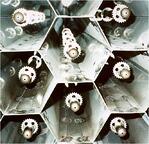
A wet electrostatic precipitator uses electrical forces to move particles entrained in a gas stream onto collection surfaces. Electrodes in the wet electrostatic precipitator are held at high voltage which creates a corona discharge. Particles receive an electrical charge as they pass through the corona. The charged particles then follow electric field lines from the charging electrodes to collection surfaces, where they are removed from the gas stream.
Dr. Cottrell applied wet electrostatic precipitator technology to the removal of sulfuric acid mist and lead oxide dust emitted from various acid-making and smelting activities. At the time, vineyards in Northern California were being adversely affected by the lead emissions. Dr. Cottrell's innovative wet electrostatic precipitator solved their problem.
Fast forward to the 2000's. Envitech brought the control of lead and sulfur dioxide to a new level by installing our most advanced wet electrostatic precipitator technology on a secondary lead smelting facility in Southern California. The resulting wet electrostatic precipitator system which removes both sulfur dioxide and lead particles is said to set a new standard in air emission control at lead smelting facilities worldwide.
With over thirty years in the industry, we wanted to start sharing the knowledge and expertise that we have gained from cleaning gas streams of unwanted contaminants. Look for future postings that examine various aspects of state-of-the-art air pollution control technologies.
For more information on our wet electrostatic precipitators, please download a brochure on them.
